
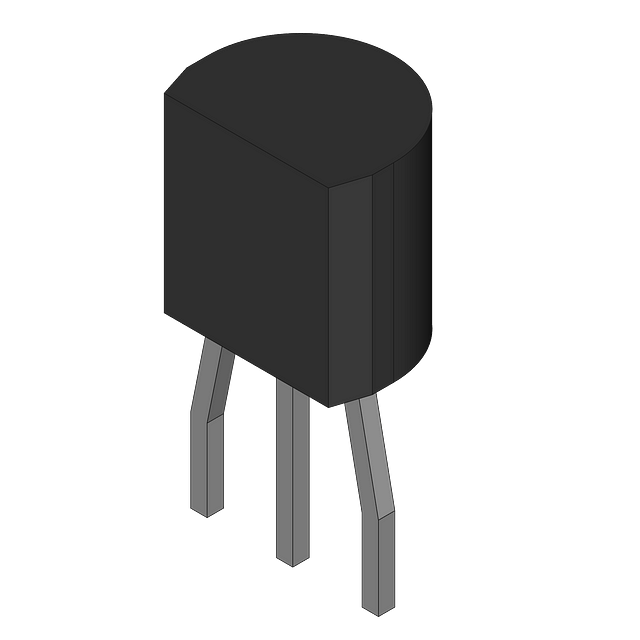
NPN Epitaxial Silicon Transistor, 2000-FNFLD, featuring a 120MHz transition frequency and 2A maximum collector current. This bipolar junction transistor offers a 30V collector-emitter voltage and a 1W power dissipation. Packaged in a TO-226-3 case with through-hole mounting, it operates from -55°C to 150°C and is RoHS compliant.
Checking distributor stock and pricing after the page loads.

Sign in to ask questions about the Onsemi KSC2328AOTA datasheet using AI. Get instant answers about specifications, features, and technical details, ideal for finding information in larger documents.
Sign In to ChatWidest selection of semiconductors and electronic components in stock and ready to ship ™
| Package/Case | TO-226-3 |
| Collector Base Voltage (VCBO) | 30V |
| Collector Emitter Breakdown Voltage | 30V |
| Collector Emitter Saturation Voltage | 2V |
| Collector Emitter Voltage (VCEO) | 30V |
| Collector-emitter Voltage-Max | 2V |
| Current Rating | 2A |
| Emitter Base Voltage (VEBO) | 5V |
| Frequency | 120MHz |
| Gain Bandwidth Product | 120MHz |
| Height | 8mm |
| hFE Min | 100 |
| Lead Free | Lead Free |
| Length | 4.9mm |
| Max Breakdown Voltage | 30V |
| Max Collector Current | 2A |
| Max Frequency | 1MHz |
| Max Operating Temperature | 150°C |
| Min Operating Temperature | -55°C |
| Max Power Dissipation | 1W |
| Mount | Through Hole |
| Number of Elements | 1 |
| Package Quantity | 2000 |
| Packaging | Ammo Pack |
| Polarity | NPN |
| Power Dissipation | 1W |
| Radiation Hardening | No |
| RoHS Compliant | Yes |
| Series | KSC2328 |
| Transition Frequency | 120MHz |
| DC Rated Voltage | 30V |
| Weight | 0.3711027g |
| Width | 3.9mm |
| RoHS | Compliant |
Download the complete datasheet for Onsemi KSC2328AOTA to view detailed technical specifications.
The embedded preview will load automatically when this section scrolls into view.
These are design resources that include the Onsemi KSC2328AOTA
onsemi Product Discontinuance Notice PD22748XB for logic and discrete devices. Includes last time buy (Jan 2020) and ship dates (July 2020) with suggested replacements.
